Trenchless Sewer Repair in South Philadelphia
South Philadelphia is trenchless country. The rowhomes went up in the 1900s through the 1940s, their clay laterals went in with them, and a century of root pressure and soil movement has turned those joints into the city's most reliable source of sewer calls. When the fix can't involve a backhoe — party walls on both sides, six feet of concrete between the stoop and the sidewalk — the no-dig methods are the only sane option.
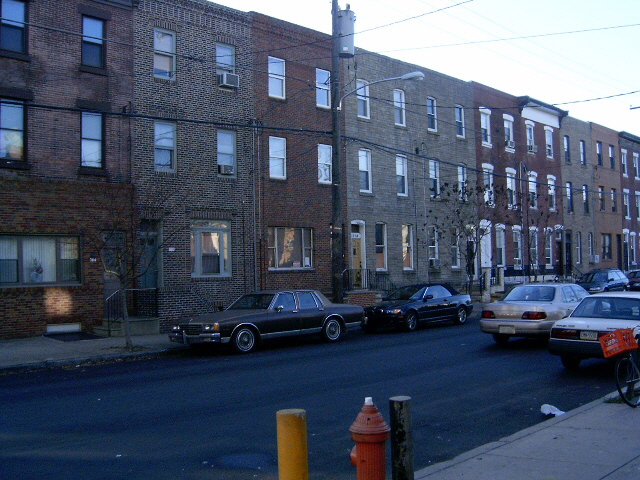
South Philly laterals: original clay, party walls, nowhere to dig
Walk any block of rowhomes south of Washington Avenue and you're looking at houses built in the 1900s through the 1940s — and underneath most of them, the sewer lateral is the same age as the house. Clay pipe laid nearly a century ago, with joints that have shifted a little every year since. Those joints are what street-tree roots find first, and in South Philly there are plenty of mature street trees to do the finding.
The classic South Philly call sounds like this: the toilet gurgles when the washing machine drains, or the basement floor drain burps up water after a heavy rain. Sometimes it's a slow creep — a drain that used to be fine and now needs snaking every few months. Sometimes it's sudden: sewage backing up into a basement bathroom, which is the phone call nobody wants to make but everybody in a rowhome has either made or watched a neighbor make.
Here's what makes this neighborhood different for the trenchless question. You share walls with neighbors on both sides. Your “front yard” is often six feet of concrete between the stoop and the sidewalk. The lateral runs under that sidewalk, under the curb line, out to the city main — and on a lot of these streets, parking a work van for the day is already an achievement. Traditional excavation here means opening the sidewalk, hauling spoils, and staging equipment in a space that barely fits your car. That's exactly the job trenchless methods were built for.
One more South Philly reality: when three houses on the same block are all having backup problems in the same week, the instinct is to blame the shared street main. Sometimes that's right — heavy rain overwhelms old infrastructure. But your lateral, from the house to that main, is yours, roots and all. A camera inspection settles the question in one visit: if the camera shows roots and offsets in your clay line, that's your problem to fix; if your line is clear and the block is backing up anyway, that's useful information to take to PWD, not to a contractor.
Which method fits a South Philly lateral
Most South Philly laterals we camera fall into two buckets. Bucket one: the pipe still holds its shape but every joint is a root entry — that's a CIPP lining job, installed through the cleanout with often no digging at all. Bucket two: the clay is broken, offset, or collapsed in sections — that's pipe bursting, two small pits and a brand-new HDPE pipe with no joints left for roots to exploit.
The deciding factor is almost always the footage, not the symptoms — a backup looks the same from inside the house whether the pipe is cracked or crushed. That's why the camera visit comes before the method discussion, every time. And when the curb trap under the sidewalk is the choke point — common here, since nearly every original lateral still has one — we plan that section explicitly: trenchless through the lateral if it qualifies, permitted street opening if it doesn't.
PWD, permits, and the street in front of your house
South Philly's density means the street is part of the job. Any work under the sidewalk or street — curb-trap replacement, connections at the main — needs Philadelphia permits and PWD coordination, and we handle that side and itemize it in the written quote. If PWD has issued you a Notice of Defect, the playbook is: read the notice, get your own camera inspection, get written quotes based on the footage, then fix it once and close the notice out.
Two public programs exist for homeowners who need help with the bill: PWD's Homeowner's Emergency Loan Program (0% interest, 5-year repayment, (215) 685-4901) and the PHDC Basic Systems Repair Program ((215) 448-2160). We're not affiliated with either — but in a neighborhood where a sewer job competes with every other household expense, you should know they exist. For official guidance, contact PWD directly.
Your lateral, in cross-section
House → lateral → curb trap → city main. In Philadelphia you own all of it except the main — and the camera is how we map yours before quoting anything.
South Philadelphia — straight answers
Usually yes — we can often run the camera by pulling a toilet or using an existing access point. But for a rowhome with an aging clay lateral, installing a cleanout is one of the smartest upgrades you can make: every future camera, jetting, or lining gets faster and cheaper with real access.
Could be either. Heavy rain can overwhelm old infrastructure and back up a whole block — but your lateral is still yours, roots and all. A camera inspection settles it in one visit: roots and offsets in your line means your problem; a clear line with the block backing up means it's information to take to PWD.
That's exactly what it's for. Bursting needs two small pits — typically one in the front areaway and one near the curb — and lining often installs through the cleanout with no digging at all. The camera visit confirms what's workable on your specific property before anything is quoted.
It's priced per foot of pipe, by method — see our 2026 cost guide for the ranges and the six things that move the number. South Philly's cost drivers are usually depth, lateral length, tight access, and whether the curb trap under the street needs its own plan. Your written quote comes after the camera inspection, never over the phone.
Yes — per Philadelphia Water Department policy, the homeowner owns the lateral including the curb trap, even where it sits under public pavement. Our curb trap guide covers what it is, why it clogs, and how it's repaired trenchless or with a permitted street opening.
What we do here
Pipe BurstingPipe Lining (CIPP)Sewer Camera InspectionSewer Lateral ReplacementHydro JettingTree Root RemovalCleanout InstallationTraditional Excavation
Other neighborhoodsSouth Philly lateral acting up? Start with the camera.
One visit, your footage, and a written plan for the actual pipe under your street — not a guess.
[[ADDRESS]] · Philadelphia, PA · Open 24 hours · PA HIC #[[HIC_NUMBER]]